
90 mins
Third Wave: Women’s Rights and Music in the 1990s
What was Third Wave Feminism, why did it occur, and how did musicians address some of the movement’s demands?
Essential Question
What was Third Wave Feminism, why did it occur, and how did musicians address some of the movement’s demands?
Objectives
Know (knowledge):
- About the Anita Hill testimony, and its continued significance
- About the development, goals, and tactics of Third Wave Feminism in the early 1990s
- How the music of Bikini Kill, Salt-N-Pepa, and Selena reflected the Women’s Rights issues characteristic of Third Wave Feminism
Mastery Objective:
- Students will be able to trace Third Wave Feminism’s goals, ideals, and attitudes by examining the work of women musicians in three musical scenes in the 1990s: Riot Grrrl, Hip Hop, and Tejano music.
Background
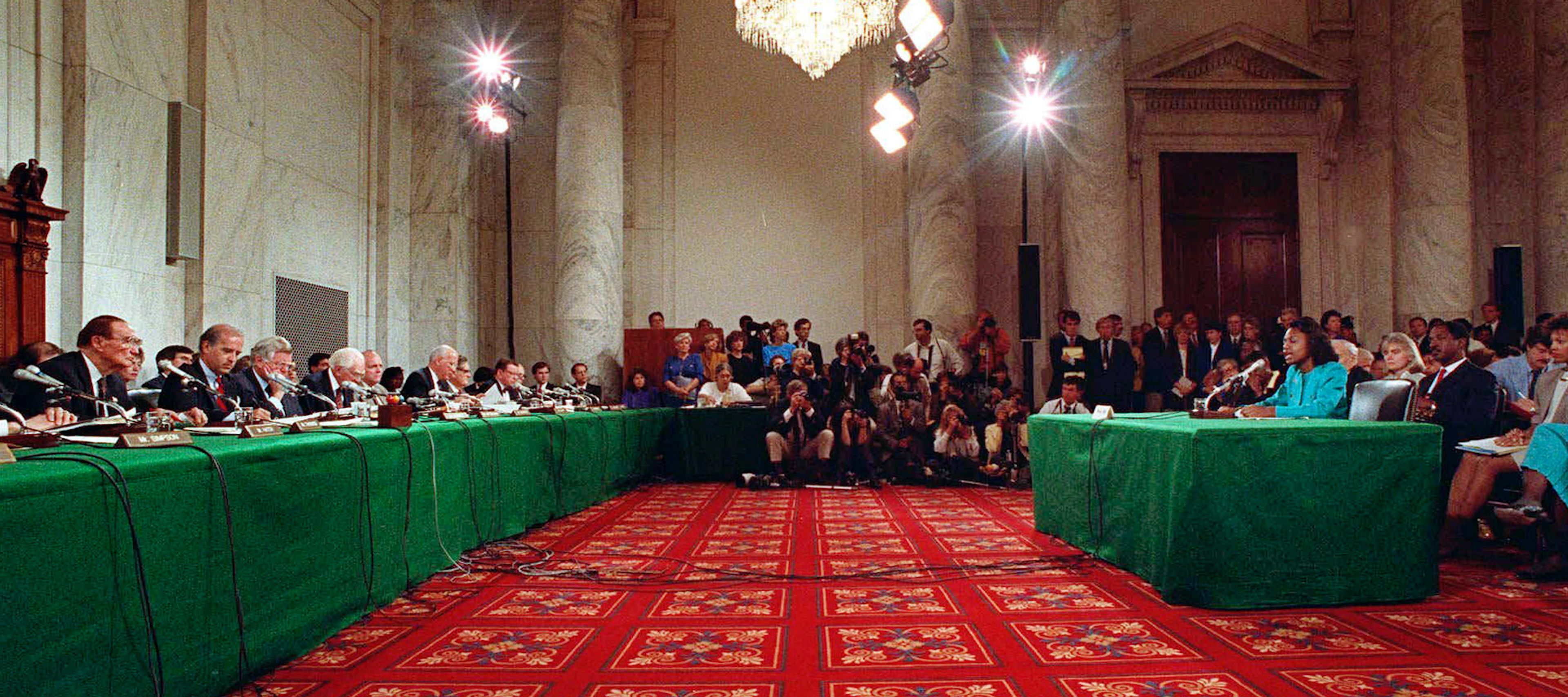
In 1991, law professor Anita Hill appeared in front of the U.S. Senate Judiciary Committee on the confirmation of Judge Clarence Thomas to the Supreme Court. Before the committee, she testified that Thomas, her former boss, sexually harassed her in the workplace. The nationally televised hearings showed the harsh, humiliating, and dismissive treatment Hill—a black woman —received from a committee made up solely of white men. Judge Thomas was eventually confirmed to the Supreme Court, but the hearing reawakened a national discussion on sexual politics and the continued gender inequality in the United States. Reactions to Thomas’ confirmation varied from elation to fury, especially amongst young women. The strong feelings that emerged from the Anita Hill case lead to the moment that is now referred to as “Third Wave Feminism.”
Third Wave Feminism was spearheaded by young, college-aged women, many of whom grew up with feminist mothers who fought for women’s rights in the 1960s and 1970s. Feeling a growing need to draw awareness to unsolved issues, from sexual assault to equal pay, their form of activism was not like their mothers’ generation. It was loud, raucous, and messy. Where second wave feminists tried to rally women around universal womanhood, Third Wavers recognized that feminism contained multitudes of intersections to address.
Just as in Second Wave Feminism, music became one of the primary ways to define and spread the demands of the Third Wave
Inspired by the Punk rock “Do-It-Yourself” (DIY) ethos, in the early 1990s females in the Pacific Northwest picked up instruments and formed their own bands and scenes, refusing to let their music or their image be dictated by what men defined as good. Led by feminist artist Kathleen Hanna, Bikini Kill became the de facto head of the Riot Grrrl movement. With aggressively political topics, the band carved out a niche space in rock to reflect the ideals and concerns young feminists of the ‘90s were embracing.
As political and well-intentioned as the feminism of Riot Grrrl was, however, it was criticized by some for centering primarily white and cisgender women. But other genres provided women of color with representations of empowerment and visibility. In Hip Hop, female rappers used their rhymes to speak about mistreatment by men, in and out of the industry, and to uplift women, especially black women. Rap trio Salt-N-Pepa found success with songs dedicated to openly talking about sex, gender roles, HIV/AIDS, and relationships. The proclaimed “First Ladies of Rap” even became the first female rap group to win the Grammy for Best Rap Performance by a Duo or Group.
Meanwhile, Tejano music, a genre originating in Texas and rooted in Mexican-American culture, saw the rise of Selena Quintanilla-Pérez in the 1980s and into the 1990s. While it included several female musicians, Tejano was mostly a male dominated genre. But Selena was able to breakthrough and achieve success. She sang about love and relationships, but outside of music, Selena became a fashion icon due to her curve hugging outfits that bared her midriff. She also was an entrepreneur who launched a fashion line, opened boutiques, signed a contract with Coca-Cola to be their spokesperson and did philanthropy work.
In this lesson, students will identify the origins of Third Wave Feminism and explore the diversity of the movement’s demands, attitudes, and tactics by immersing themselves in three musical cultures from the 1990s: the Riot Grrrl punk rock scene exemplified by the band Bikini Kill, the female-fronted hip hop scene exemplified by Salt-N-Pepa, and the Tejano music sphere exemplified by Selena.
Disclaimers
Warning: This lesson contains strong language and depictions of sexual violence. It is intended for upper high school and early college students, and teacher discretion is advised.
Connected Themes
Artist(s)
Decade/Era
Monthly Theme