
90 mins
Trade-offs of Urban Sprawl
How does the Pretenders song “My City Was Gone” illustrate the trade-offs households and communities make when rural land succumbs to urban sprawl?
Essential Question
How does the Pretenders song “My City Was Gone” illustrate the trade-offs households and communities make when rural land succumbs to urban sprawl?
Objectives
Know (knowledge):
- The consequences of mass urbanization on the well-being of communities and the environment
- The impact on their own community’s identity and experience
- The significance of the Pretenders song “My City Was Gone”
Mastery Objective
- Students will be able to explain the consequences of urban sprawl by analyzing selected cases in the U.S., interpreting the lyrics to the Pretender’s song “My City Was Gone”, and exploring their own communities through a photographic scavenger hunt.
Background
In this lesson, students will be introduced to the concept of “urban sprawl,” and the migration to suburban communities. They will identify the consequences of this shift by analyzing selected cases in the U.S., interpreting the lyrics to the Pretender’s song “My City Was Gone”, and exploring their own communities through a photographic scavenger hunt.
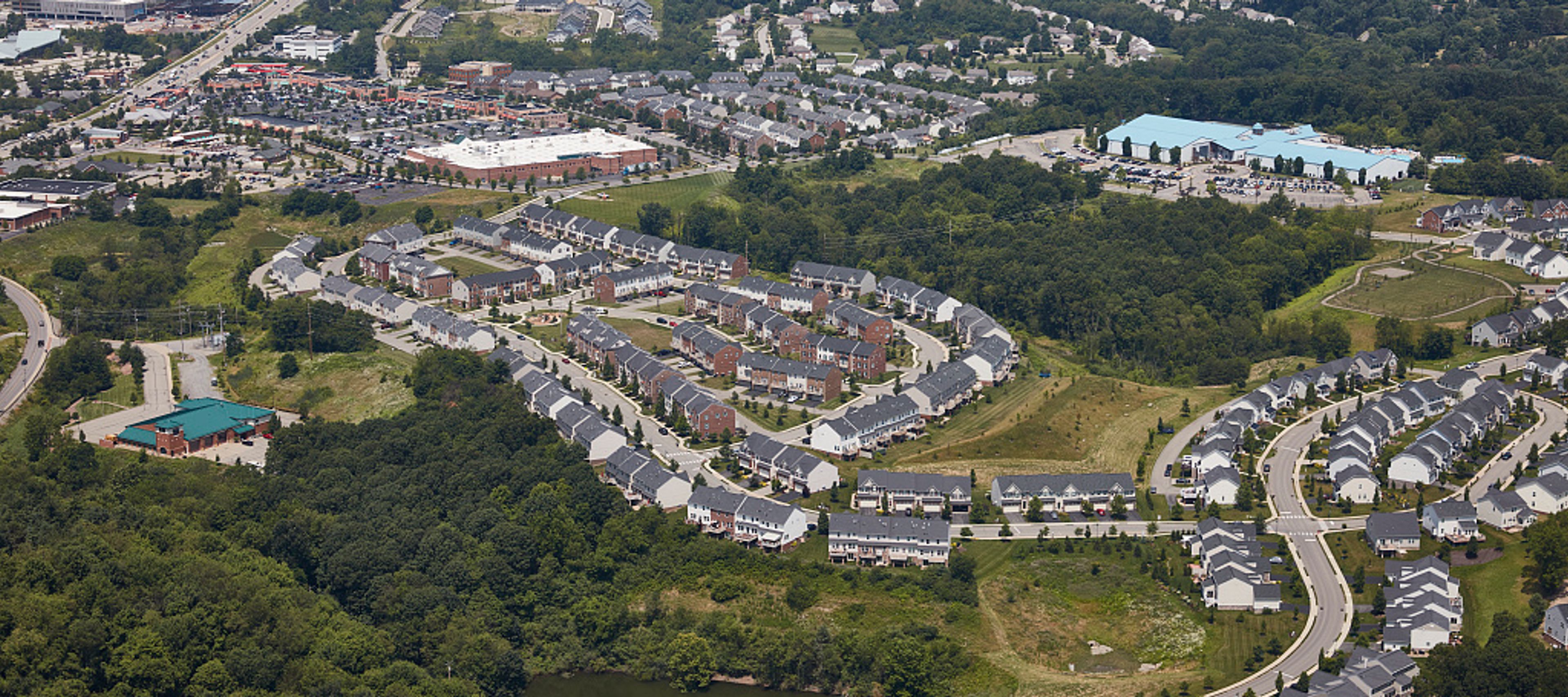
Urban sprawl, also referred to as suburban sprawl, metropolitan sprawl, or suburbanization, refers to the outward expansion of cities and towns, typically characterized by low-density housing and spiraling growth extending beyond existing urban centers. This phenomenon arises from increasing urban populations and the appeal of the open space found on city outskirts. Features of urban sprawl, such as extensive land use, wide streets and highways, limited public transportation, and a scarcity of walkable areas, contribute to heavy reliance on personal vehicles. Since many jobs remain concentrated in city centers, a daily influx of commuters often leads to traffic congestion and increased pollution.
Globally, the land area occupied by cities is projected to triple over the next 40 years, consuming farmland and posing significant threats to sustainability. This rapid urban sprawl is often fueled by the pursuit of better economic prospects, enhanced access to education and healthcare, and diverse social and cultural opportunities.
On the surface, urban sprawl appears to benefit local economies. It stimulates job creation through construction and infrastructure projects, while homeowners and businesses contribute revenue via property and sales taxes. However, scientists warn that urban sprawl has numerous negative consequences, including habitat destruction, increased water and air pollution, the exacerbation of environmental challenges, increased infrastructure costs, inequality, and social homogeneity. Furthermore, urban sprawl can adversely affect local rural communities and lead to the phenomenon of “placelessness - a feeling exemplified in the Pretender's song “My City Was Gone.”
Materials
A device with internet access