
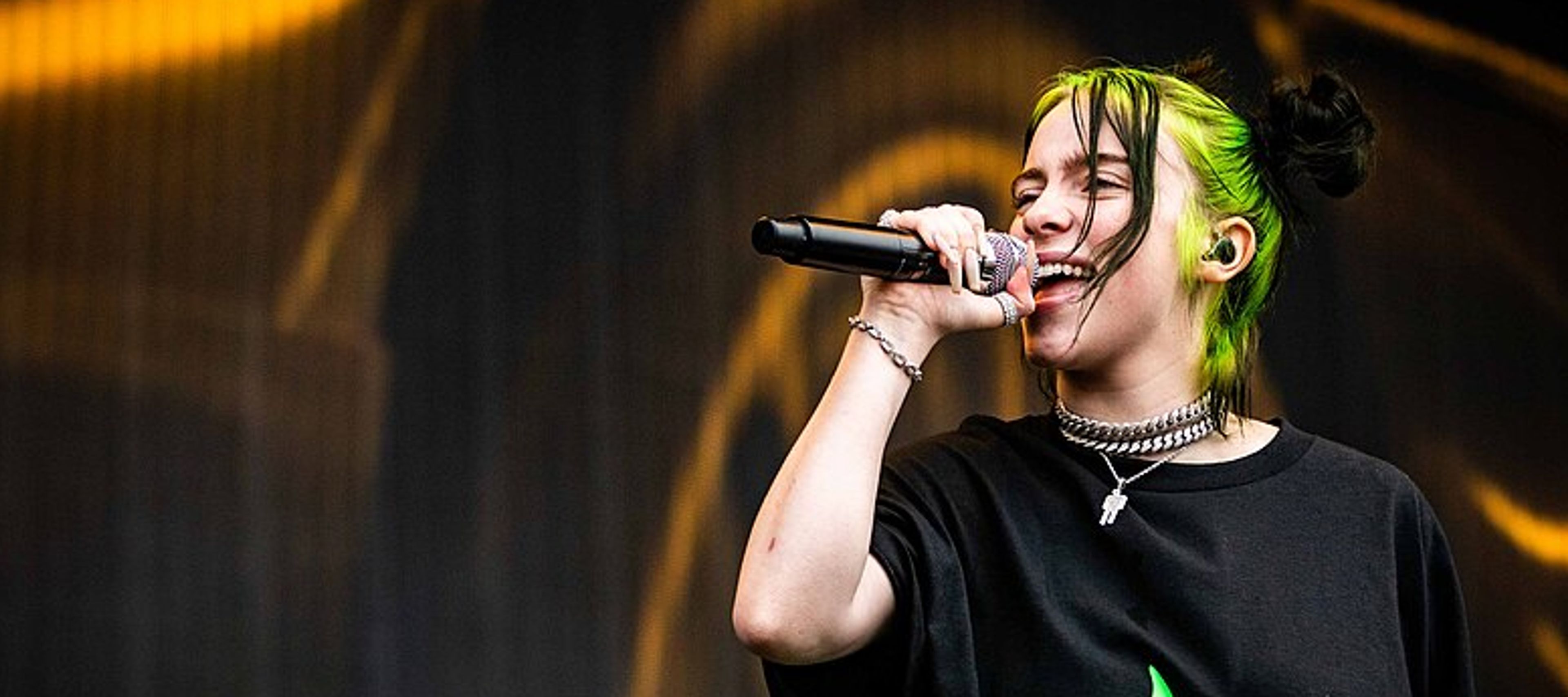
Tuned In: Building Music Appreciation Skills
How can listening more closely to music help us appreciate and connect with it in new ways?
How to Use This Lesson
This is a Harmony Student Wellness lesson, a week-long, music-centered social-emotional learning lesson designed to be taught across multiple sessions, culminating in an arts-based project. This lesson can be taught in isolation or as part of the larger Harmony Student Wellness program. For more support on implementation, see the Implementation Guide on the program page.
Essential Question
How can listening more closely to music help us appreciate and connect with it in new ways?
Objectives
Mastery Objective
- Students will be able to recognize the artistic choices that make music engaging, even when it isn’t their personal favorite, by listening closely and analyzing a range of songs.
Day 1 - Students will:
- Listen to “Bad Guy” by Billie Eilish
- Consider the value of appreciating music outside their personal tastes and preferences
- Recognize the various uses of repetition in songs
Day 2 - Students will:
- Listen to “Love Me Tender” by Elvis Presley
- Identify melody in songs
- Process emotional response to melody through metaphor
Day 3 - Students will:
- Listen to “Uptown Funk” by Bruno Mars, “Sorry I’m Here for Someone Else” by Benson Boone
- Identify rhythm in music
- Consider how rhythm impacts the way we move to music
Day 4 - Students will:
- Listen to “Texas Hold ‘Em” by Beyoncé
- Learn music vocabulary related to movement and style
- Explore the relationship between music and movement
Arts-Based Activity - Students will:
- Reflect on how repetition, rhythm, melody, and movement can help us understand and appreciate a song more
- Choreograph four 8-counts of a song from this lesson
Background
In this lesson, students will build music appreciation skills by exploring how musical elements, including repetition, melody, and rhythm, shape how we feel and move. By listening closely and analyzing a range of songs, students will learn to recognize the artistic choices that make music engaging, even when it isn’t their personal favorite. Students will also explore how motion is naturally connected to musical expression. The lesson culminates in a collaborative choreography activity, where students apply what they've learned by creating movement to music. Throughout, students are encouraged to be curious, reflective, and open-minded about music that may be new or unexpected to them.
Materials
Required for all lessons:
- Student Journals
- Art Supplies
Days 3 & 4:
Slides
Connected Themes
SEL Competency
SEL Subskill(s)