
90 mins
Music and the Berlin Wall during the Cold War
What was the Berlin Wall and how did music respond to what it symbolized?
Essential Question
What was the Berlin Wall and how did music respond to what it symbolized?
Objectives
Know (knowledge):
- An overview of Cold War tensions between the United States and Soviet Union
- A history of the rise and fall of the Berlin Wall, and its impact on people living in Berlin
- How music helped connect a divided city through a shared sense of fear, angst, and hope
- Popular and underground music of the late Cold War Era, including pop, rock, and punk
Mastery Objective:
- Students will be able to identify how music helped people resist the idea of the Berlin Wall by analyzing primary and secondary sources including videos, interviews, and photographs.
Background
On September 1944, shortly after the Allied powers liberated Paris from the Nazis, representatives from the United States, Great Britain, and the Soviet Union met in London to plan the future of a post-Hitler Germany. Together they drafted the London Protocol, which partitioned the country into four zones after the war. The western half of Germany would be split between Great Britain, France, and the United States, and the eastern half would be administered by the Soviet Union. The protocol also stipulated that Berlin, while geographically on the eastern side of the country, would also be partitioned, again with the U.S., Great Britain and France controlling the west side and the U.S.S.R. controlling the east side.
After the war ended, the discussion of Germany’s future grew contentious. The Soviets wanted to keep it unarmed, while the Western powers felt reestablishing the German Army would restrain the Soviets from expanding into Western Europe. In 1946, the French, British, and American portions of Berlin unified into a single region. Fearing a concentrated Western influence deep in Soviet territory, the USSR attempted a blockade on all the rail and highway access to the western side of the city. In response, the American, British, and French alliance organized the Berlin Airlift, delivering supplies to the city by air. The Soviet blockade failed, and Berlin remained a divided city, insulated in East Germany.
The Soviets were correct in their thinking that a “free” Berlin posed a threat to their influence. By the 1950s, hundreds of thousands of East Germans were migrating to West Germany via Berlin. Fearing a “brain drain” as young, educated Germans left the East, the Soviet Union officially sealed the border between East and West Berlin, and began building a perimeter wall around West Berlin in August 1961.
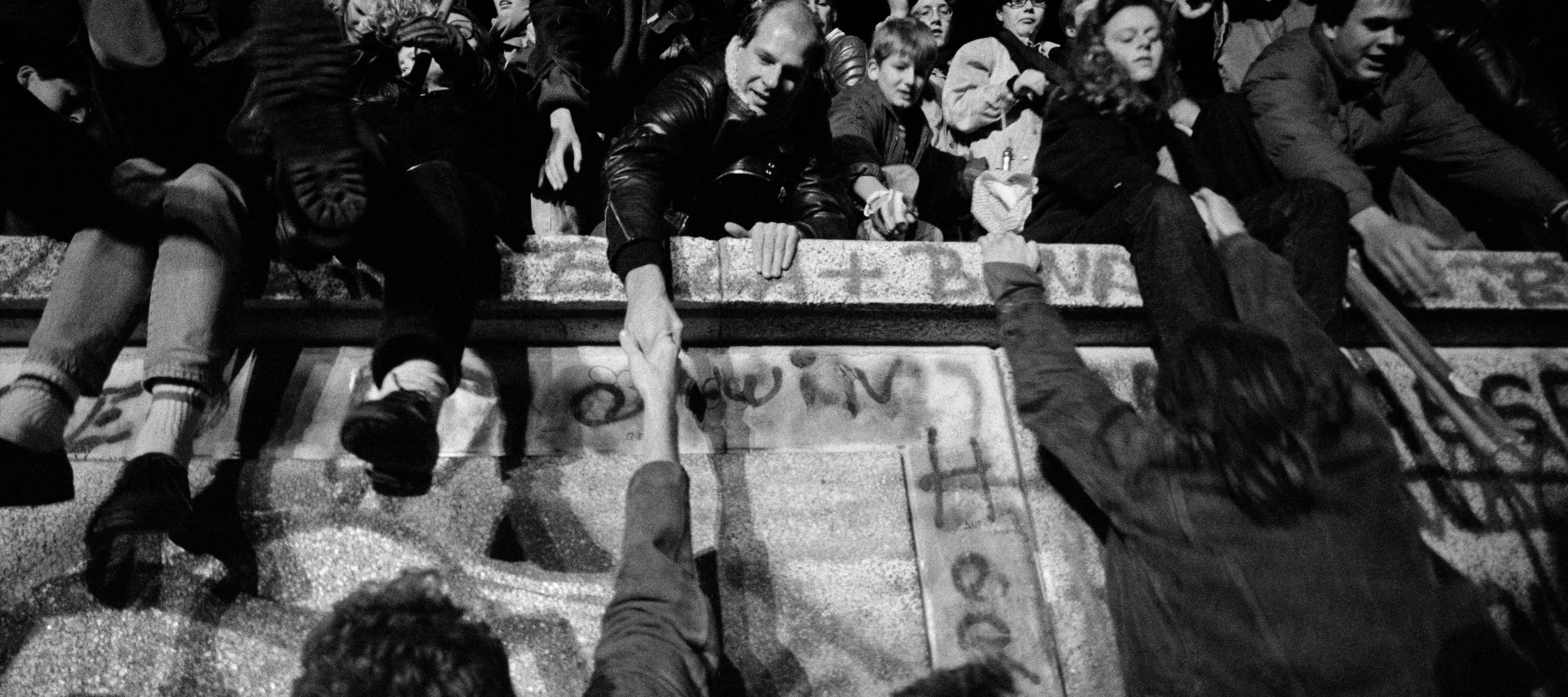
With the construction of the Berlin Wall, the “Iron Curtain,” once just a symbol of the division between the communist and non-communist world, literally became concrete. The Wall arose almost overnight, separating neighbors, families, and friends. It remained up for almost thirty years. Its fall in November 1990 heralded the end of the Cold War.
Although the Berlin Wall was able to curb the movement of people between East and West Berlin, it could not stop the movement of ideas, art, and culture that continued to connect the two sides of the city. In the 1960s and 1970s, all Berliners were able to tune into Rock and Roll radio, and a youth counterculture was created that transcended the Wall. This counterculture was not only unified by a mutual love of music, but also in their shared opposition to the proliferation of nuclear weapons, which threatened the annihilation of the entire city. By the 1980s, the Hippie counterculture was slowly taken over by the punk rock scene, which helped a new generation of young people channel their angst and creativity. For forty years, popular and underground music connected East and West Berliners by tapping into a shared sense of fear, anxiety, and hope.
In this lesson, students will consider how Germans resisted what the Berlin Wall symbolized during the Cold War by examining the musical cultures that developed in East and West Germany. To do this, students will watch clips from CNN Soundtracks and analyze primary and secondary historical sources such as newspaper articles, cartoons, interviews, and photographs.
Connected Themes
Artist(s)
Decade/Era