
Music and The Civil Rights Movement
Discover how music became one of the primary vehicles for the Civil Rights Movement.
Overview
With its heritage in both West African and European traditions, Rock and Soul music have always been entwined in the history of racial relations in the United States. Indeed, the combination of these two geographically disparate traditions vis-à-vis the tragedy slave trade is what has defined and in many ways continues to define American popular music.
At the same time, there has been a long history in the United States of attempting to deny the multi-racial origins of Rock and Soul. Audiences, musicians, and venues were often forced to remain segregated, and almost as soon as records were invented, record companies created genres such as “Hillbilly” and “Race” records specifically to keep musicians and audiences segregated.
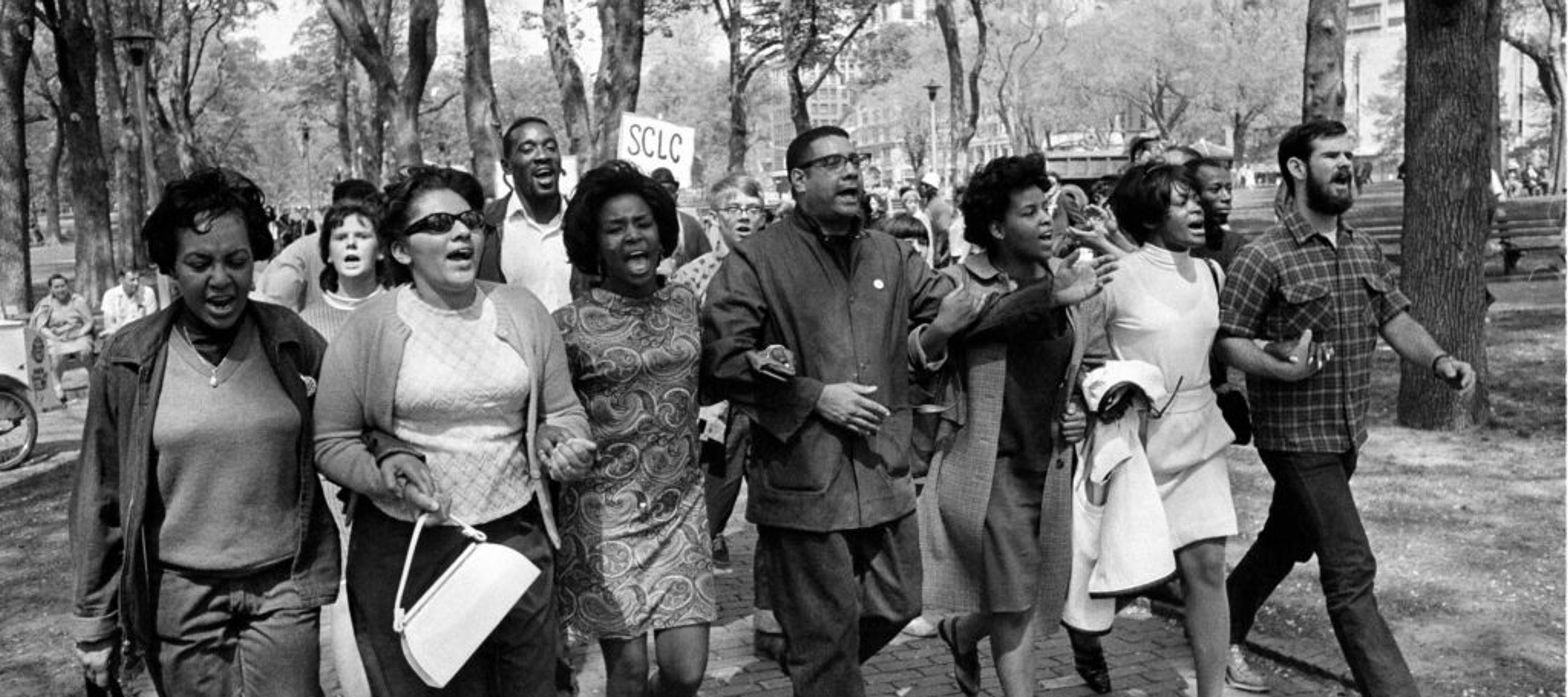
As Unit 1 describes in more detail, popular music in the 1950s began to crumble such artificially constructed barriers, as a multiracial group of young became became equally enthralled with the new sounds of Rock and Roll and Soul music. But by the 1960s, Rock and Soul musicians began to take a more active role in the growing desegregation and civil rights movement – no longer satisfied with providing a soundtrack to a changing America, but become active participants in that change.
This unit examines the role Rock and Soul music played in the Civil Rights movement in the 1960s, and considers the ways music might act as an effective tool to spur social change.
Themes
Topics
Decade/Era