
180 mins
The Gilded Age featuring the Phonograph
How does the invention of the phonograph represent how the daily lives of Americans changed during the Gilded Age?
Essential Question
How does the invention of the phonograph represent how the daily lives of Americans changed during the Gilded Age?
Objectives
Know (knowledge):
- The social, economic, and political effects of the Second Industrial Revolution
- The impact of the Industrial Revolution in urban and rural places
- Why this period of time is referred to as the “Gilded Age”
- The role of business leaders, entrepreneurs, and inventors during this time period
- The societal conditions of the Gilded Age as reflected in Upton Sinclair’s book, The Jungle
Mastery Objective
- Students will be able to describe how the daily lives of Americans changed during the Gilded Age through the analysis of images, data, and primary sources.
Background
In this lesson, students will explore the social, economic, and political effects of the Industrial Revolution during the Gilded Age. Students will examine inventions like the phonograph and industrial growth data during this period to determine why the Gilded Age appeared golden on the surface. Students will then analyze contemporaneous newspaper articles about Upton Sinclair’s 1906 book, The Jungle to identify the societal problems hidden under the Gilded Age’s golden exterior.
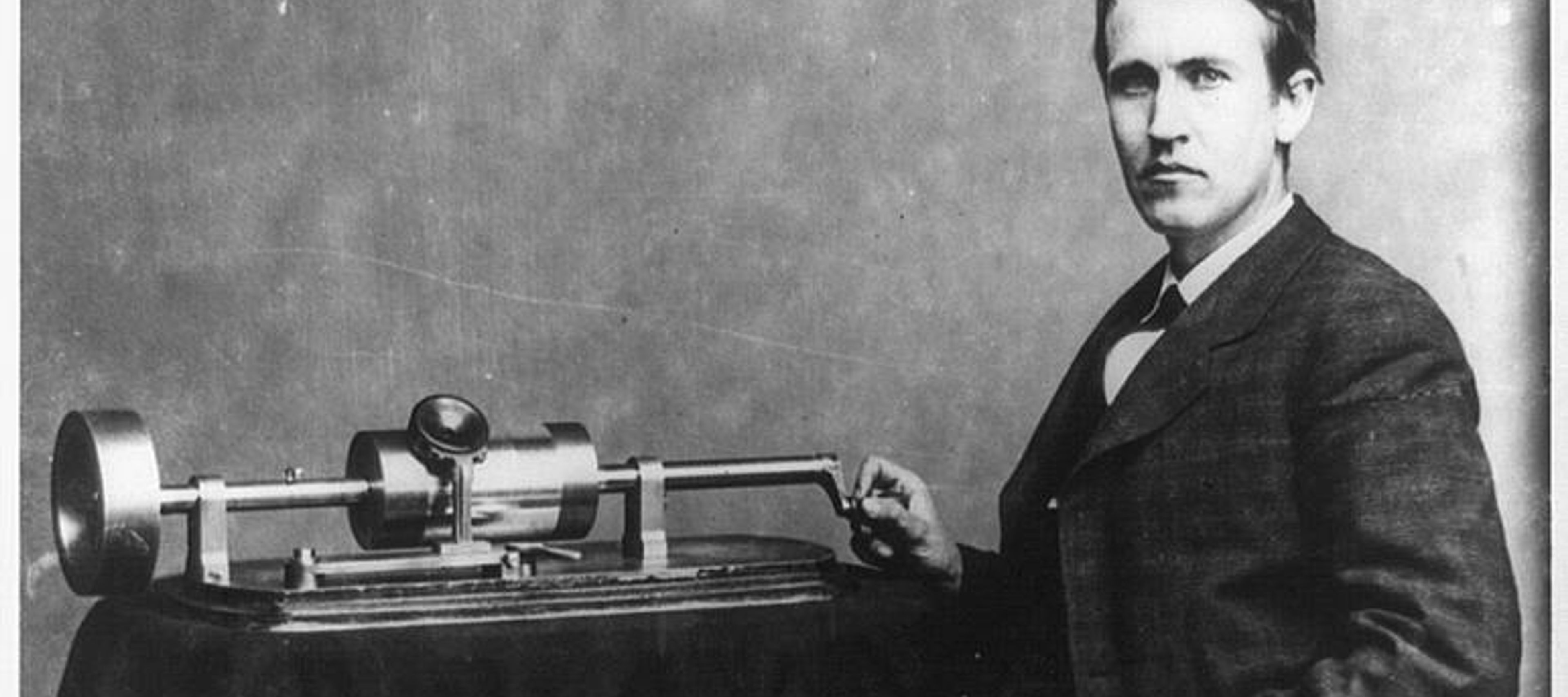
Before the phonograph was invented in 1877 by Thomas Edison, music could only be heard if it was played live at home, performed in a concert hall, or presented in other places where music was played by musicians. The phonograph, like other inventions of the Gilded Age, would change the lives of Americans and would be the beginning of what most historians consider “Modern America”. The time period of the Gilded Age (1876-1900) saw great advancements in transportation with the expansion of railroads, and telecommunications with the invention of the telephone. Inventions and innovations spurred rapid growth in the economy through the railroads, steel, coal, and other industries.
The Gilded Age was propelled by the Second Industrial Revolution that began around 1870. Historians adopted the term, “Gilded Age” for this era from Mark Twain and Charles Dudley Warner’s satirical novel of the same name published in 1873. In the book, Twain and Warner offer commentary on greed and corruption during this time period by using the word “gilded.” “Gilded” refers to the practice of covering the surface of cheap metals with thin gold leaf. In doing so, the outside of an object glitters with gold, thus projecting an appearance of great quality, while concealing the poorer quality of the object’s interior elements. This metaphor has been applied to the Gilded Age where industrial growth and prosperity by a few concealed the many societal problems in America underneath the surface.
The Second Industrial Revolution transformed the United States. The transition from an agricultural to an industrial society led to the growth of the modern city. Between 1870 and 1920, eleven million people migrated from rural to urban areas where the majority of manufacturing jobs were located. In addition to this migration, twenty-five million immigrants came to the United States and made urban areas their home during this time period. This rapid population growth shaped the cities we know today but also led to new problems in society. Overcrowded tenements, poor sanitation, corrupt political machines, and poor working conditions lay underneath the advancements in urban areas during the Second Industrial Revolution.
As industrialization shaped America, the gap between the rich and the poor widened. During the Gilded Age, the richest 4,000 families had as much wealth as the rest of the 11.6 million families in the United States. Some of the wealthiest men during this time, Andrew Carnegie, J.P. Morgan, John D. Rockefeller, and Cornelius Vanderbilt have been called both “Robber Barons” and “Captains of Industry”. These men were labeled “Robber Barons” for their ethically questionable business practices; like forming monopolies, using their power to influence politics, and their exploitation of workers. They were given the more favorable label, “Captains of Industry,” for their role in driving the boom in industrialization and innovation that led to increased job opportunities and the nation’s economic growth.
One aspect that made the Gilded Age not golden underneath its shiny surface was the lack of infrastructure and government regulation to keep up with industrial expansion. Examples of this can be seen in the photographs of Jacob Riis, which brought viewers into the crowded tenements of New York City where much of the city’s immigrant working-class lived, and disease spread quickly and living conditions were poor. Or in the Chicago meat packing plants, where the deplorable working conditions for meat processing are unimaginable in the 21st Century. Lastly, in political machines like Tammany Hall in New York City, where government corruption was rampant but local politicians sought to remain in power by trading job opportunities with immigrant voters in exchange for their support during elections.
Materials
- A device with internet access (1 per student)
Preparation
- Provide students access on their device to the following newspaper documents from the Library of Congress website.
- Article 1 - “Upton Sinclair’s Own Story of the Horrors of Packingtown” (pdf version here)
- Article 2 - “Upton Sinclair’s Own Story of How He Was Led to Expose Beef Trust Horrors” (pdf version here)
- Article 3 - “Upton Sinclair Tells About the Sufferings of Women in Packingtown” (pdf version here)
- Article 4 - “Discovery of Condemned-Meat Industry Accidental, Says Upton Sinclair” (pdf version here)
2. Display Gallery Walk – Robber Baron or Captain of Industry? around the classroom.
Connected Themes
Decade/Era